Laboratory and quality control
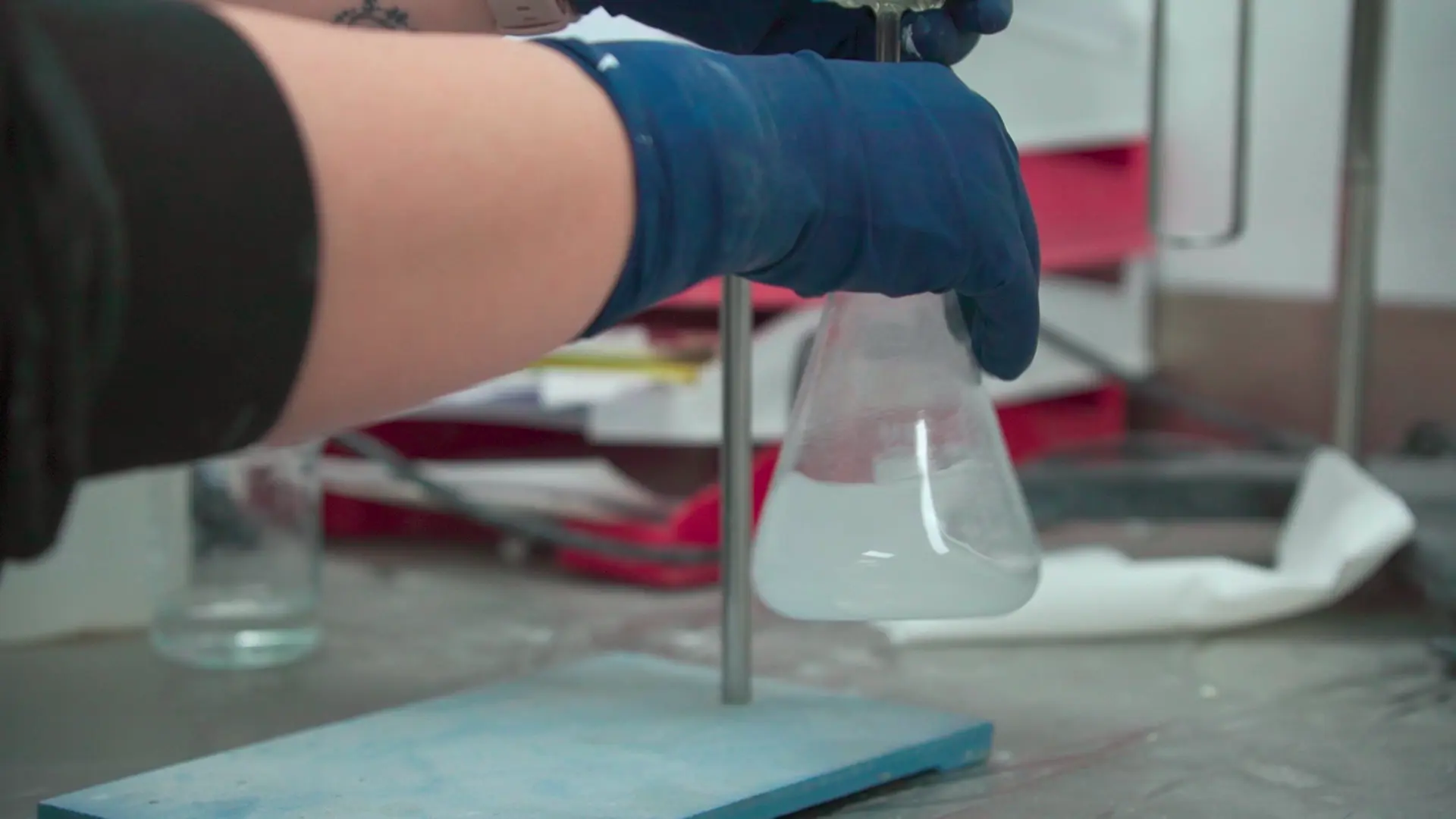
In our internal quality control laboratory, we conduct thorough periodic tests on selected shower tray samples. Each of them undergoes chemical, mechanical, and strength tests that allow us to evaluate their behavior against factors such as humidity, cleaning agents, or daily wear.
Additionally, we carry out technical comparisons with the main market standards, which allows us to guarantee not only compliance with current regulations but also superior performance. Thanks to this rigorous verification process, we ensure that each shower trays that leaves our facilities meets the highest levels of reliability, safety, and durability, reflecting Torbath Furniture's commitment to excellence in every detail.
Mold Preparation
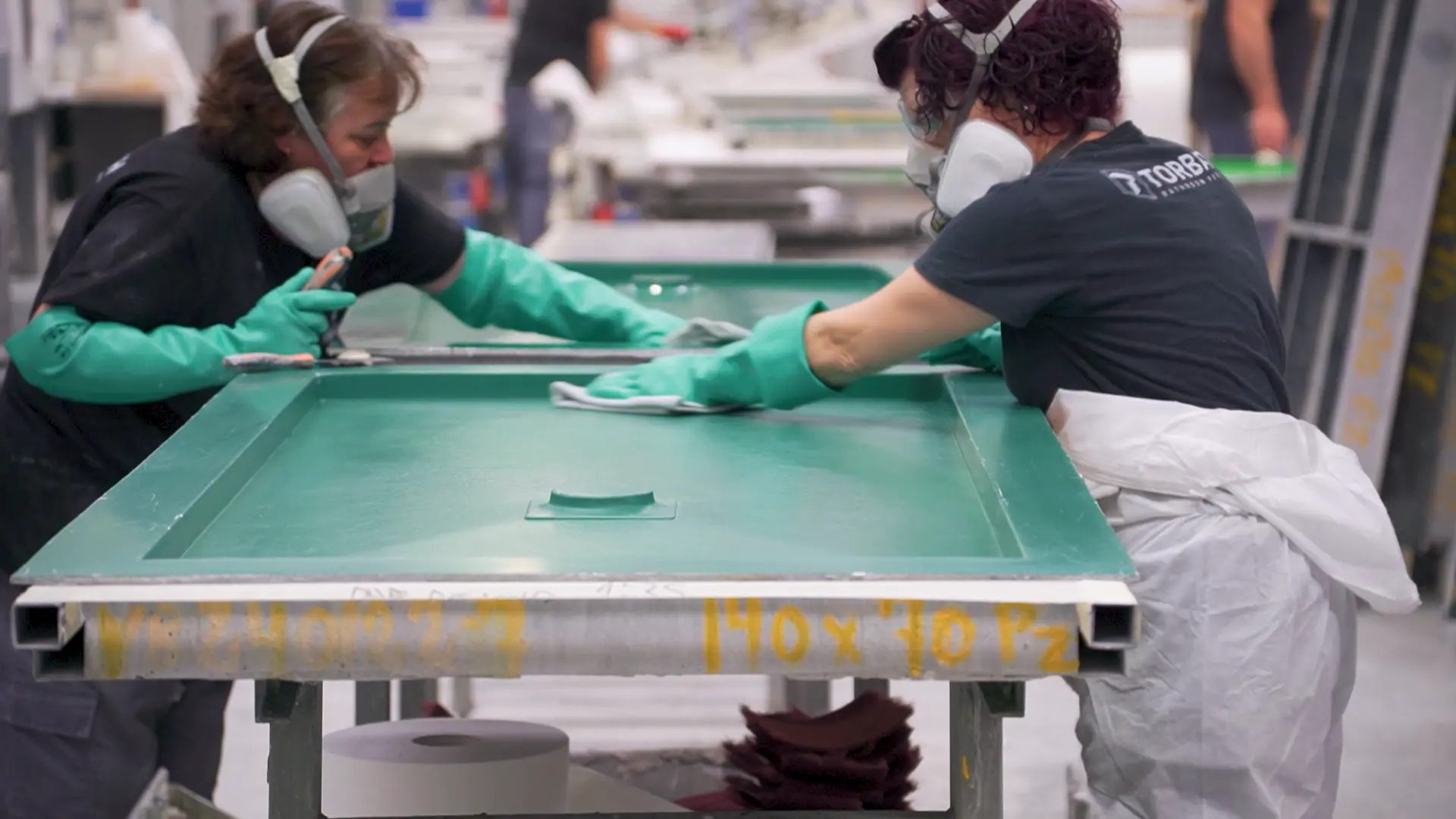
Each shower tray is made from a mold specific, whose original matrix is made of wood. These molds have a lifespan of up to 5,000 units (approximately 7 shower trays per day per mold). Mold preparation is critical: each size and model has its own, and work is always done “upside down,” placing the mold in an inverted position for the correct application of subsequent layers.
Gel Coat Coating
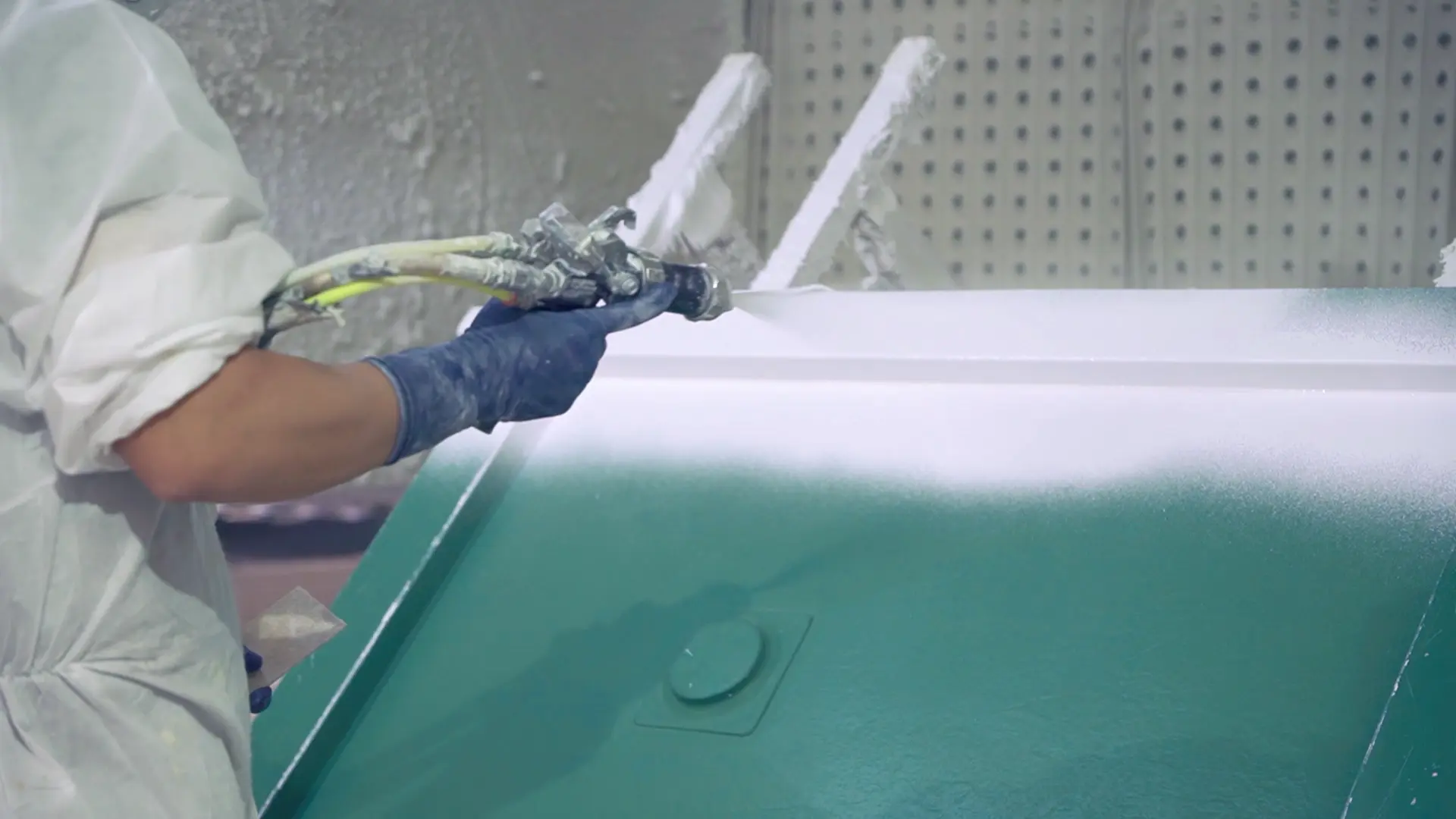
A layer of 500 microns of
ISO NPG
, a material used in the naval industry for its waterproofing and chemical resistance. The gel coat accurately copies the texture of the mold and acts as a protective barrier against moisture and wear.
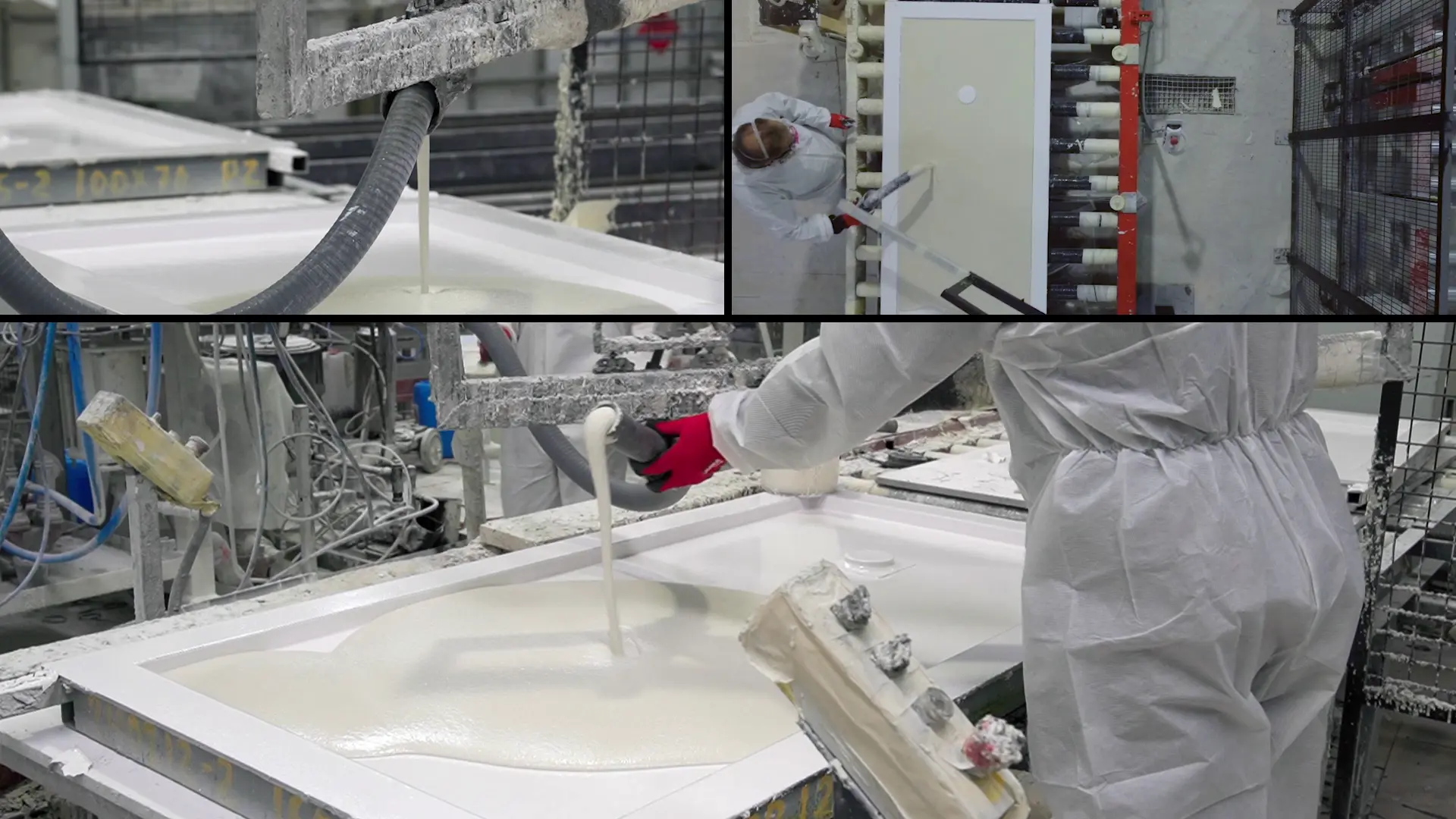
Pouring of Strato Titanlight® Mixture
The mold is filled with the Strato TitanLight®, composed of resin, mineral filler, and pigment paste. To achieve uniform hardening, two key reactants are incorporated: catalyst and accelerator. This innovative formulation allows for lighter, more durable, and easier-to-install shower tray.
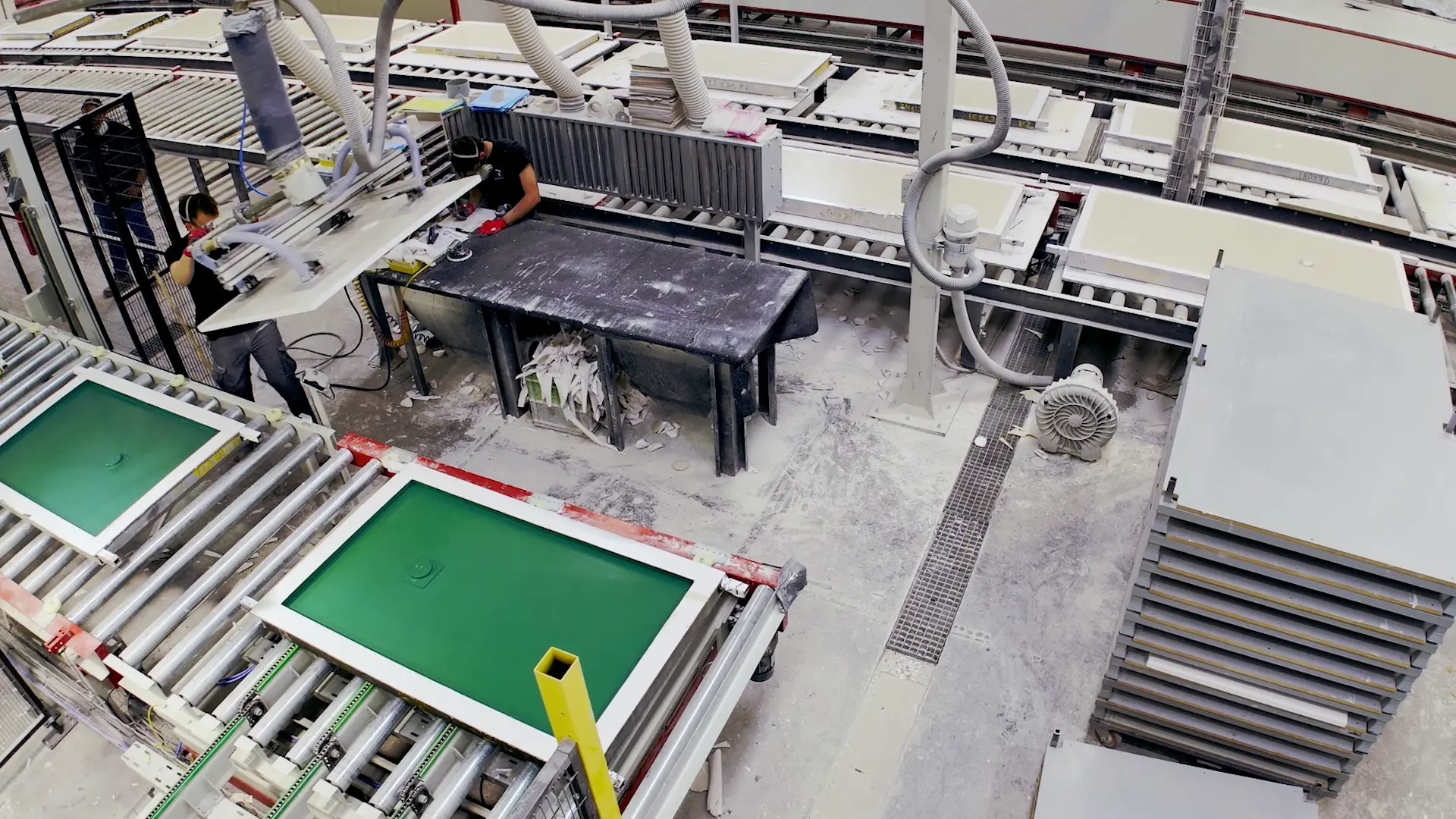
Demolding and Preparation
After the initial curing, the demolding. At this point, each shower tray is sanded and polished to remove imperfections and prepare the surface for the curing phase.
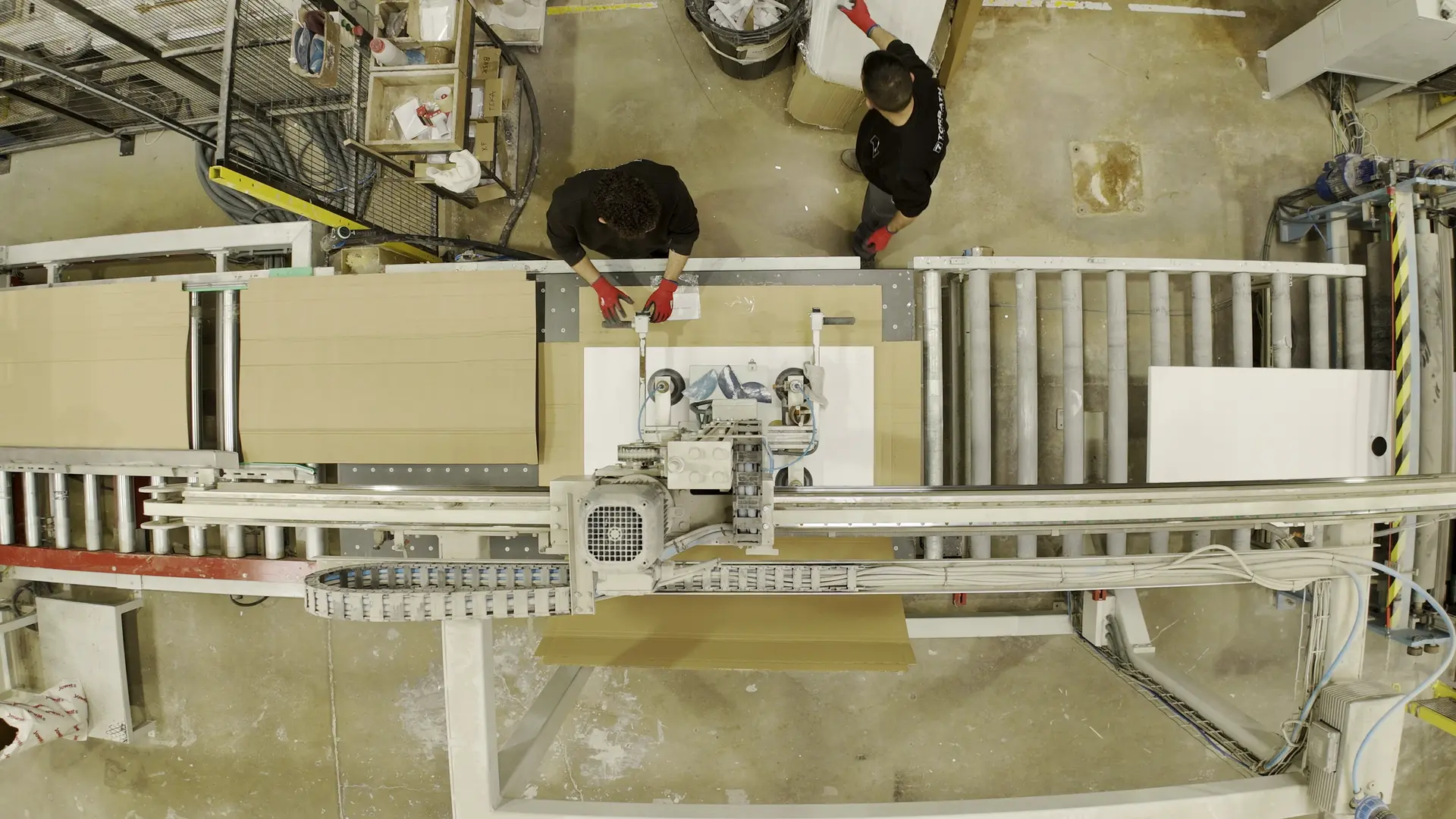
Curing and Post-Curing Process in Oven
The post-curing process in the oven is a critical stage in the manufacturing of mineral load shower shower trays,
as it is essential to ensure that the materials used are hardened completely and acquire the necessary strength and durability for daily use.
This additional curing process
is necessary due to the nature of the materials used in manufacturing. The way to
guarantee that the product has completely finished its curing process is to subject it to a post-curing cycle at certain temperatures.
In addition, oven post-curing also allows shower trays to maintain their shape and original size, which is essential for their installation and subsequent use. The strength and durability obtained through oven post-curing also ensures that the shower tray has a prolonged lifespan, which reduces long-term maintenance and replacement costs
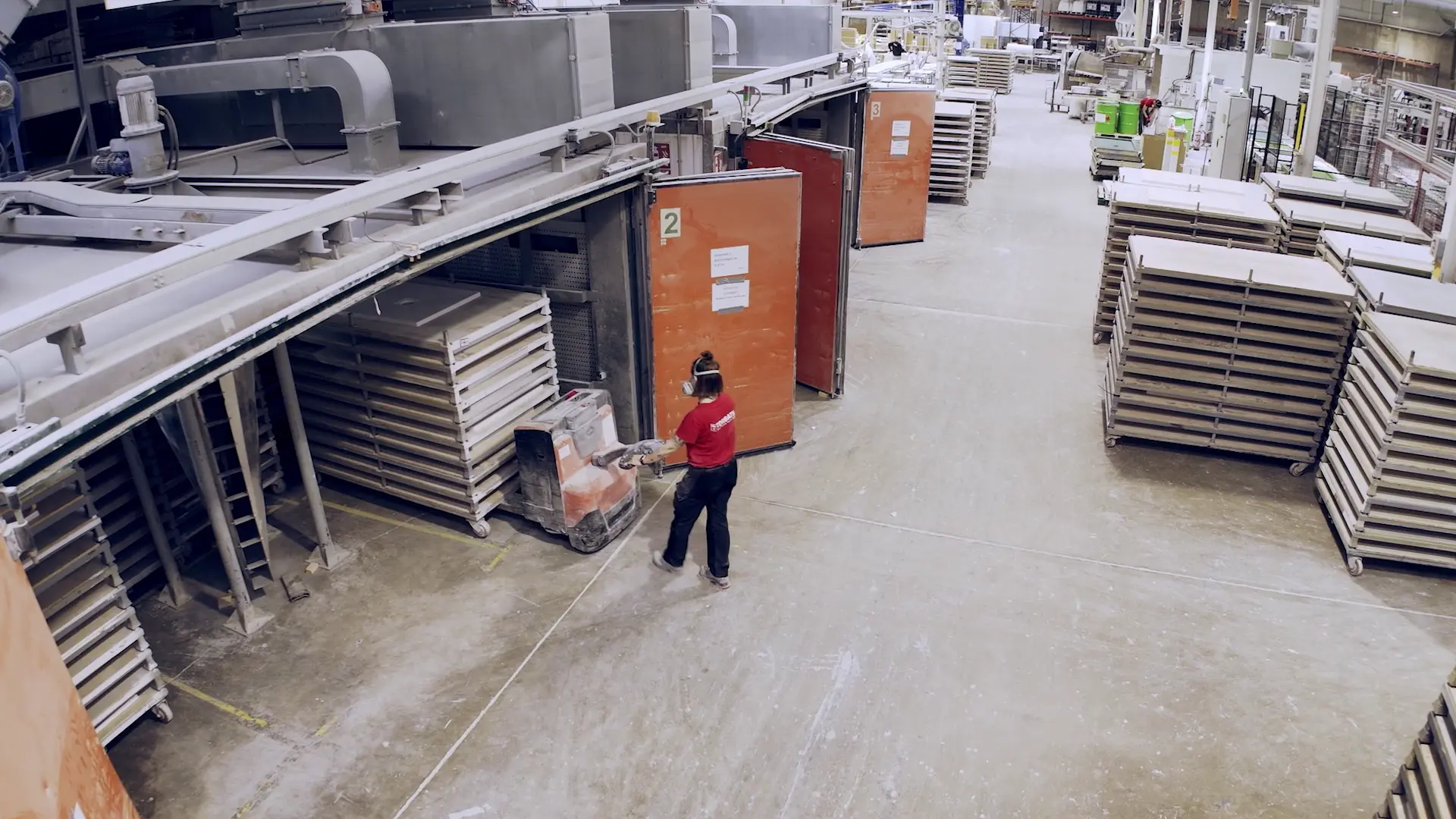
Reinforced and sustainable packaging
Our shower trays are packaged in reinforced cardboard boxes, without single-use plastics. This system offers several advantages:
Greater safety during transport, thanks to the reinforcement of corners and faces.
Sustainability, by using only cardboard, which facilitates recycling without prior separation.
Cost savings associated with the plastic tax (Law 7/2022), contributing to a responsible circular economy.
Environmental commitment, being part of the packaging management program of Ecoembes.
In this way, we not only better protect each shower tray against impacts and damage during handling, but we also reduce our environmental impact and facilitate the recycling of all packaging.
Automated warehouse
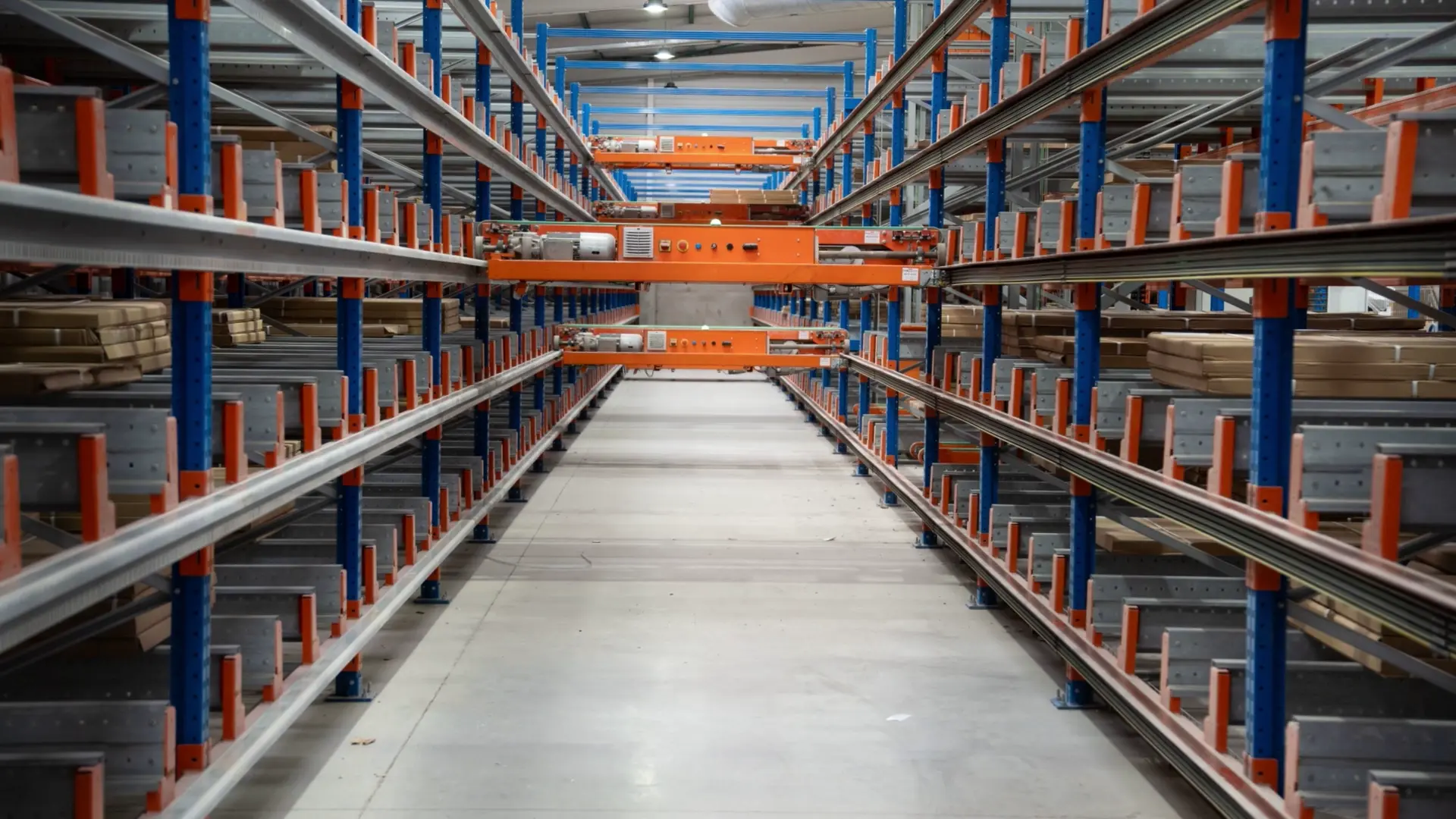
Finally, the finished shower trays are moved to our automated warehouse, which automatically organizes the stock, optimizes space, and ensures total traceability up to shipment.
This system has a total capacity for 4,080 units, organized into 1,020 spaces, each with the possibility of stacking up to four shower trays per slot. Its main function is to reorganize the finished shower trays according to their width and length, allowing for precise and quick classification that facilitates subsequent shipment.
It is a temporary and dynamic storage system, which provides flexibility in daily management and ensures a continuous flow of product in the production chain. Thanks to this automation, we guarantee more rigorous control, better space optimization, and a significant reduction in handling times.